
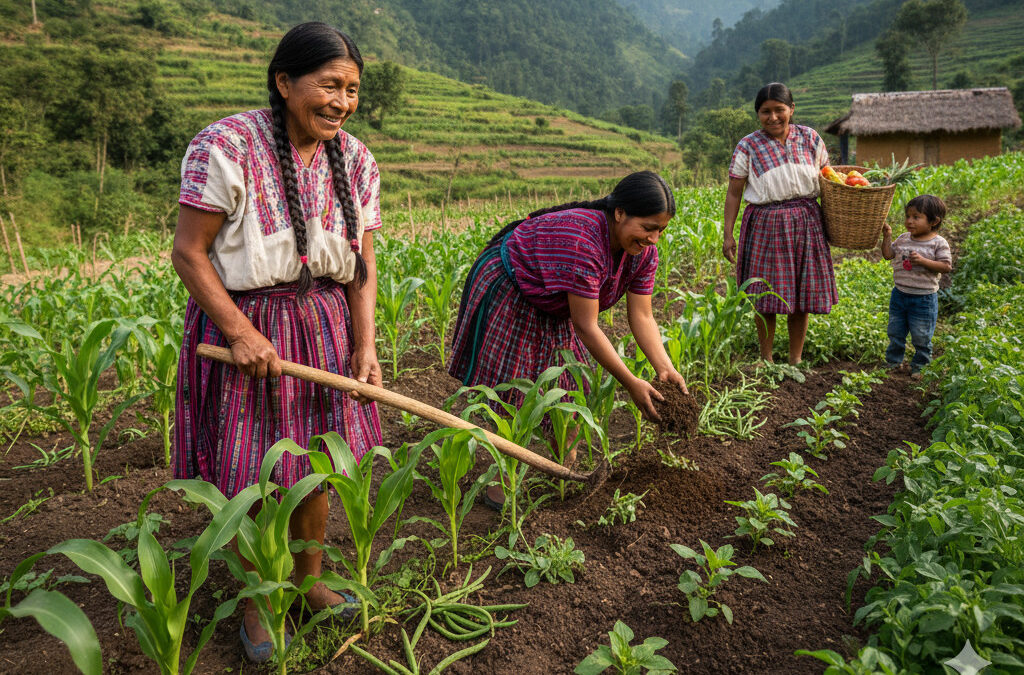
Women have long been the guardians of the earth, stewards of ancient wisdom passed down through generations. Yet, in the era of industrial agriculture, their voices were silenced, and their knowledge undervalued. Regenerative agriculture offers a chance to reclaim those lost traditions, empowering women as leaders in the fight against environmental degradation and social injustice. By recognizing the critical roles women play in managing land and water resources, we can unlock a brighter future where sustainability and equality coexist.
The Foundational Role of Women in Food Systems
Current research, particularly from global institutions like the UN Food and Agriculture Organization (FAO), reinforces the indispensable role women play globally. Women constitute, on average, 43% of the agricultural labor force in developing countries, and this share is even higher in specific regions, such as sub-Saharan Africa. They are often responsible for the majority of the labor involved in planting, weeding, harvesting, and processing food crops essential for family and community sustenance. They are Knowledge Holders. Women are frequently the keepers of agrobiodiversity knowledge, possessing deep, localized understanding of crop varieties, seed saving, traditional water management, and the holistic relationships between soil, plants, and local ecosystems—all foundational concepts of regenerative practice.
As those most immediately affected by resource scarcity and climate instability, women are already stepping up as powerful agents of adaptation and innovation. In many communities, they are the key figures adopting techniques like agroforestry, cover cropping, and efficient water harvesting. Their success then serves as a powerful model for community-wide change.
Nutrition Gatekeepers
Globally, women’s control over income and farming decisions is strongly linked to improved household nutrition and health. By leading the transition to diverse, regenerative farming methods, women directly impact the quality and variety of food available to their families and communities.
Regenerative Agriculture as an Empowerment Tool
The shift to regenerative agriculture provides tangible pathways for empowering women economically and politically. It produces reduced input costs and economic autonomy. Regenerative systems, which prioritize building soil health over purchasing expensive synthetic fertilizers and pesticides, often lead to lower production costs over time. This reduction in dependency on external financial inputs can increase women’s economic autonomy, especially in contexts where they have limited access to credit or markets.
Enhanced Resilience to Climate Change
Women farmers often manage marginal lands that are highly vulnerable to climate change impacts like drought or flooding. By improving soil organic matter, regenerative practices dramatically increase the soil’s water-holding capacity, making their farms more resilient and secure.
Access to Land and Rights
The push for regenerative practices helps highlight the need for secure land tenure for women. Studies show that when women have secure legal rights to their land, they are more likely to invest in long-term, restorative practices that benefit the environment and their communities. Regenerative agriculture, therefore, is not merely an environmental movement; it is a social justice initiative that corrects historical gender biases, recognizes traditional knowledge, and ensures that those who work the land have the power and resources to heal it.
Recent Comments